![]() |
| Trinity Icon by Andrei Rublev Photo from Wikipedia |
Tuesday, 30 August 2022
The Humble Circle
Tuesday, 12 July 2022
The Bell Tower
![]() |
| Photo taken at the Church of St. Francis Xavier 12 July 2022 |
As I walked into the church compounds, my attention was seized by this sight.
A desire welled up from within...
May I be like this bell tower?
That withstands the wind and rain, the scorching heat of the sun, to stand without falling, without bending, confident in its foundation... to sound the invitation of the Lord to come, receive, be loved and nourished. At its heights, visible from afar for all who are seeking a sign and direction. Visible, not for its own self, but for that which is infinitely greater - the God of all.
May the Lord grant my heart's desire.
Amen.
Saturday, 4 June 2022
What do You see?
What do You see in me, Lord, that I don't?
That You should pick my life up from the dumps, shake off its dust and place it against Your own heart?
What do You see in me, Lord, that I don't?
That You should come to my side, bear the stench of my sins and still, look lovingly into my eyes?
What do You see in me, Lord, that I don't?
That You should open Yourself and walk me into Your very life, and there, give me Home?
What do You see in me, Lord?
That Your eyes should rest upon the plain and ordinary me, that You place onto my shivering palm the key to the interior world - Your world of magnificent intricacies?
What do You see in me, Lord?
That You should even entrust to me Your own flock, give me the most undeserved privilege of labouring alongside You - YOU, GOD - to lead them home to You?
What do You see in me, Lord, that I don't see?
That You should allow Your people to hear me and rise up into the realms of Your divinity, there, to touch You?
The truth, Lord, is that I don't see what You see. And I might never.
Help me to trust You, even when I cannot see as You see.
Help me to allow You, even when I cannot understand your choice.
Help me - in my helpless wonderments, my loss of words, as I reach the limit of my human intellect that cannot transcend into the infinity of Your power and wisdom - to be still.
To simply be still.
To be.
To surrender.
Sunday, 17 April 2022
God - the Word and Wordless
Saturday, 12 March 2022
Contrasts
Is this beautiful?
If it is, what makes it beautiful as the candle within shines out in the same way as other tealight candles do?
It is both light and shadow, hollowness and opacity, a mixture of illumination and darkness - a contrast that creates a pattern that is cast out, cast upon.
Contrasts...
Is not the sunrise particularly captivating because there is the emerging light that meets the darkness of the passing night? Would sunrise be the sunrise people wake up early to watch if it was just one gigantic blob of blinding light?
Are not mountains intensely stunning because they rise high above their valleys? Would nature's landscape have the same power to take our breath away if it was just one piece of flat land?
It is easy to admire the beauty of shadows - of light blocked by a lack of clarity and transparency. Shadows mesmerise, like how my students enjoy playing with them, cast by the light from the classroom projector. It is easy to admire the mountains and valleys, the ups and downs. Because they exist outside of us.
It is not so easy to admire contrasts when they are the shadows of our hearts, when they map the ups and downs of our chaotic life. I don't like such shadows and how I wish they were all eliminated at once! How nice life would be if it was all flat ground, easy to trek across! How about you?
Yet, the reality is that contrasts exist within me, within each of us. Light and darkness, good and bad, strengths and weaknesses, successes and failures, joy and pain, laughters and tears, hope and despair, love and fear, dreams and reality... the healed and the still hurting, the already and the yet-to-be, the I am and the still becoming.
Can there possibly be beauty in the seemingly imperfect, in the contrasts of our human reality?
Or should I ask... Why can't there be?
Why can't we celebrate the process of becoming instead of being so insistent that things must already be?
We fear the shadows, the pain, the yet-to-be, the reality, the imperfections. Because we know our vulnerability that is capable of receiving deep hurts. We also know our power to hurt another. We fear being overwhelmed, that the boat of our lives be overturned by powers we are helpless towards. We fear the ugly for we long to be loved in our beauty. This is our human nature that longs for love. Love alone fills us.
Blessed is he who finds love that embraces his contrasts, his human reality. But independent of finding such love, dare we relook at our own perception of what beauty looks like, of what life-charming entails? Dare we love ourselves in the reality of who we are, with the myriad of contrasts that affirms we are only on-the-way and have yet to fully arrive at the perfection we hope for? And then, to extend this love to others?
Isn't this the redeeming love of God for us that delights in us even as we are only still becoming? The love He nailed to the cross in an irreversible way is such an all-embracing love. Lent isn't, to me, so much a time of intentional fasting and almsgiving to give up something that causes me to feel a pinch. While it is necessary to determinedly turn away from sin and be more loving, the way to this isn't quite to set goals to work towards but rather, by displacement - that I intentionally spend time to look more closely at how God has loved me and treated me, to stay at the foot of the cross for long and allow Jesus hanging there to speak to my heart about what His death and rising are truly about. Filled with His love, redeemed and transformed by His love, only then do I have the reference and capacity to love myself and others in the way I've first been loved.
I bought this lamp from IKEA a few months ago because I knew its shadows would be beautiful. I only just got struck by its beauty tonight. Isn't it beautiful?
Thursday, 3 March 2022
Lent - The son returns (Luke 15:11-32)
| Photo by YouTube |
The parable of the Prodigal son (click for passage) is a familiar passage. Yet, the beauty of the Gospels never wanes and its messages are never exhausted.
If you take a closer look at the details of the story and/or enter into its scene using the Ignatian contemplation, the Holy Spirit might reveal to you certain details you never saw before.
I'd like to share one insight today.
In the story, the father did something most fathers would probably not do - give the son his share of the inheritance prematurely - which meant giving the son the means to live independently, and choose his own lifestyle as he pleased.
Why did he do that? One might ask if he was in the right state of mind! Surely, he was well aware that the whole inheritance - accumulated by his own hard work and sensible saving - would be wasted. How much good could that sum of money be used for instead! How could he allow his son to wander so far from home when the latter was going to live irresponsibly? Did he not care if his son met with some mishap far from home and it would be too late to send help?
The next thing the father did, or rather, did not, was to remain behind instead of going after the son to bring him home. Does not sound like he missed his son very much at all. Or did he?
"But while he was still far off, his father saw him and was filled with compassion; he ran and put his arms around him and kissed him." Lk 15:20 (NRSV)
It was no coincidence that the father saw the son in the far distance. He was still far off. At such a great distance, the son's return could only be noticed by one who was deliberately looking out, every waking moment, as long as the light touched the earth. Every day. So much so that he did not miss the moment when his son's return came within sight. Here is a father who waited, day in, day out, patiently, lovingly; who pined for his son. He would have left the house or stood at a spot where he had an unblocked view of the return path. Who knows how many days he repeated this routine of looking out, only to face the futility of his waiting each night.
Could it be that this father did not go out to bring his son back not because he did not want to but because his son's return wasn't his choice to make? Perhaps, it was a choice his son had to make for himself. And until he's made that decision, it would have been pointless for the father to drag the empty shell of his son home. Because it wasn't his body - his mere presence in the house - that satisfied the father. But a heart that was at last ready to return home, a personal will that had, at last through the lashes of harsh consequences, has resolved to turn away from the empty pursuits of pleasure and indulgences. To force his son to stay by his side would be to save himself from emotional pain but deprive his son of the opportunity of a life-changing self-discovery. What a huge risk this father took! And what a celebration he had!
Where do we find ourselves in this story and insight?
There are many possibilities.
Perhaps, we can relate with the son. God gave us free will. He takes huge risks by allowing us to use our limited and flawed capacities to make choices even if it means to see us err. But in the erring, there could be important lessons. In the hymn Ashes, commonly sung on Ash Wednesday, there is a line,
"Though spring has turned to winter, and sunshine turned to rain; the rain we'll use for growing and create ourselves anew..."
If we find ourselves on the path home, can we take heart in using the rain for growing?
Perhaps, we can relate with the father, even though we may not be fathers ourselves. When others err, or when we see them heading down the wrong path, what do we do? How do we react? To be honest, if it is someone I love very deeply, I tend to panic, my fears stirred up, and I would start trying to do all I can to fix the situation and prevent things from falling apart. But not all life situations are humanly 'fixable'. In times like this, it takes a while but thank God for His graces, there comes a time when I would become aware of my fears and get reminded of God's invitation to trust, to let go, to allow things and relationships to die in order for it to find new life because it does no one any good to try so hard holding in tact that which is already in pieces.
Where do you find yourself in this story and insight?
What situation in your life might God be speaking to as you read this sharing?
Let's take some silence to listen.
Have a grace-filled Lent.
Sunday, 9 May 2021
Learning to Love Someone - Utter Dependence on God
I have not blogged in a very long while but there is something coming up for me since January 2021 that has set me on a very unusual, unpredictable, unexpected, unplanned and very challenging journey. It entails learning to love.
Fr Chris Soh, SJ said before, "Love is effortful." I cannot agree more.
UTTER DEPENDENCE ON GOD
Loving an intimate other is a whole different experience from loving a group of everyone else. Perhaps, this marks a huge difference between the married and lay single / religious vocation. Loving an intimate other naturally desires for the other to reciprocate the love and it is very specific. We hope and desire from this person what we do not in the same way hope and desire from any other person.
But as with all human relationships, we cannot control anyone other than ourselves. No matter how much we want the other to love us in return, there is absolutely so much we can do to try to win that love. And even if we have won that love, there is no certainty of securing that love for the rest of our lives.
When something shakes the foundation of a relationship - an argument, a hurtful comment, a selfish decision - and working things out together between the couple is not a mutual decision of commitment, how? When two hearts are not beating as one, when they are not quite on the same page, and the future of the relationship so tremendously dear to you is bleak and at times even hopeless, how?
Pain, heart-wrenching pain, insecurities, uncertainties, more pain, fear, anxiety...
Whether or not we dare to admit, we are after all only humans - limited, finite. The more I fight this truth instead of accepting it with humility, the harder I try to "fix" things, the messier things get, the more exhausted I feel, the less "natural" things are, and ultimately, what do I get? The same dead-end; I face the same human limitation that renders me helpless in the face of an independent other I cannot control.
The only one then who I can now depend on after acknowledging my helplessness is God. If there's anyone who can pave out a way I cannot pave out, it is God. If there's anyone who can, in short, help the situation, mend the brokenness, it is God. No one else.
God alone knows best. He loves us more than anyone can possibly love us. If the relationship is His will, then all we need to do is to hand it over to Him, to entrust it to His love and provision, to beg Him to do for us what we in our limited powers cannot do. And discern where God is leading us, listen and follow His lead, trusting that whatever the outcome may be, it will be the best for each of us. It may be the best only upon hindsight 10 years later, who knows! But what I can say is that if it is a relationship God blesses, I know and have witnessed Him making a way where there really seemed to be no way.
The question then is...
How personal and deep is our relationship with God that allows us to surrender to His loving providence? And if we don't know God enough to trust Him this much, perhaps this is the starting point - deepening this relationship through prayer, contemplation, perhaps even with the help of a trained spiritual director.
Utter dependence on God.
May God give us the grace to truly be poor in spirit so as to be rich in Christ.
Sunday, 21 June 2020
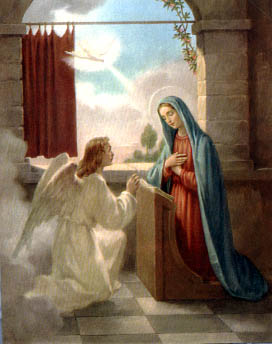
The Feast of the Immaculate Heart of Mary
![]() |
| source |
And today (20 June 2020 - I'm half an hour late), the Church honours her immaculate heart. May we discover our deepest thirst for God and allow Him to gradually merge our hearts with His.
This is a prayer of offering I have been praying when the priest consecrates the bread and wine during the offertory at Mass. It is adapted from Karl Rahner's captivating words in Encounters with Silence:
Friday, 19 June 2020
10th Anniversary of Conversion
Sunday, 14 June 2020
Inner Healing - Unnecessary, Yet Love Desires It For Us
![]() |
| source |
To help us understand and relate a bit more easily, let's look at a very human experience - parents accompanying their sick child through a process of recovery.
For most parents with children, I'd think that one of the most worrying and stressful situations they can face is when their child falls sick or gets injured. Not only parents are worried but anyone in the family who loves this child will feel it too.
When I was in primary school, I sprained my ankle when I fell off the beam during gym practice. My parents brought me to the Chinese doctor to get it fixed. I'd say it never quite got fixed to what it was before the sprain. After some time, the pain subsided and my body learned to live with the injury.
Then in secondary school, I sprained both ankles a number of times each playing basketball. By then, I knew that even if I were to leave the injury alone, sooner or later, I will get used to the injury and adapt accordingly. Yet, my parents would always bring me to see the Chinese doctor and if one does not seem to be able to assure us he knows what he's doing or if I don't feel somewhat better, they would find out from relatives and friends of other doctors that have a good reputation, and will bring me there.
What was going on in my parents and in all those of us who have ever experienced worrying about someone we love who's unwell and wanting the best treatment available for that person?
A sprained ankle does not threaten my life but there are lasting consequences. My ankles became weak, I couldn't wear heels without feeling some sort of discomfort and at times, pain. And weak ankles means I am more prone to further sprains because they are less able to support my movements. As a child and teenager, I did not think that far so I was still walking around with my bandaged ankles, disobeying the restrictions to my movement that I was advised to follow.
But despite the injury being relatively quite minor as compared to a fatal illness, my parents wanted me healed. Perhaps, they saw what I couldn't see at my immature stage, and did not want me to live with those lasting consequences of my unhealed injuries. And I'd say that this comes from a space of love.
Love desires the healing of the beloved.
Love desires the beloved to be made whole again.
Love desires the beloved to live free of the effects of injuries.
And this love is a reflection of God's love.
When we are hurt by others, even to a small degree that does not lead us to thoughts of suicide or to depression, it may seem like healing isn't necessary. We can still adapt and find ways to go on with life and to function as effectively as we know how to. Healing isn't necessary for God to love us or call us to be disciples and to minster to others. But healing is a very natural desire of love. And it is a great gift of love.
When God grants people the grace of awareness of how they are hurt and how it is affecting their attitudes, their behaviour and relationship with others, what is His purpose? I cannot fathom a loving God who desires our wholeness only to a certain extent. I cannot fathom a loving God who gives people awareness of their hurts and how these are manifesting in daily life just so they could live with a greater awareness and be able to mentally choose a better way of responding when triggered. God's love is far greater than that.
My parents did not tell me, "Ok so you have a sprained ankle. Now this has lasting impact. So next time when you feel the pain when walking in heels, you've got to remember that the cause of it is actually the sprains you sustained in earlier days." It would really be quite strange if they told me that. What huge difference would it make for me to just know this? I would still experience the pain, I would still be unable to jump high or far because of the weakness.
So when we are hurt, yes we can still experience the love of God, we can still function in our daily tasks, we can still be called to serve others in ways we can and in this regard, it may seem from this perspective that healing isn't necessary; unnecessary for all these. But love desires more. Love that is endless and infinite desires complete wholeness. Though we won't be able to arrive at that complete wholeness in our lifetime, there is always the more that love desires for us.
If we are deeply connected with God's love for us, I believe we will know that His love desires for us to live free; free from the negative effects of our injuries. And we will be more open to receiving this great gift from His loving hands.
Saturday, 13 June 2020
Inner Healing - Why? I've Been Living Without It
because he has anointed me
Whose joy is greater?
The rugby fan cheering on the spectator stand whose team just won the match or the rugby player who trained hard, sustained injuries, pressed on and fought to win the championship?
![]() |
| source |
Through counselling, one can learn healthier ways of managing one's anger for instance. That's functional. But with healing, one won't even have to experience that anger when those specific triggers of that anger are healed. I find this a much better option and way to live.
The process of inner healing is painful and arduous but not once have I regretted each experience of it because the liberation it gives me is something I won't trade for an easier path.
Saturday, 14 March 2020
Jesus said, "... Do this in remembrance of me."
We remember our Trinitarian God through Jesus by loving as He loves. And in a pandemic situation we are all in now, loving others is working hard to protect everyone - not just our loved ones.
But some one will say, "You have faith and I have works." Show me your faith apart from your works, and I by my works will show you my faith. You believe that God is one; you do well. Even the demons believe-and shudder. Do you want to be shown, you shallow man, that faith apart from works is barren?
Wednesday, 22 January 2020
Holding Ourselves in Grief
![]() |
| Source |
Thursday, 5 December 2019
Advent has INDEED begun for me
I waited through the night with a high temperature, just to wait some more at my doctor's the next morning. (She was very kind to see me earlier than expected!) I waited for my temperature to drop, for the cough to stop, for the alternating shivers and perspiration to end. When it is a viral fever, I have learned that there is nothing anyone can do and I just got to wait. I waited in bed the past 3 days to feel more strength, waited for the time I could finally sit up to eat without seeing stars.
Time passed me by without waiting and still I have to wait.
To be honest, I got tired of waiting. It is more annoying to wait this time because I have another trip this Saturday to prepare for. And since it is a retreat, I feel all the more the need to prepare well. It explains the growing frustration that I seem to have wasted 3 days sleeping. And I don't even know if I'll be fit to fly by Saturday though the fever subsided yesterday. More than the physical readiness, I have not packed or run any of my errands. I just don't feel ready for the retreat at all levels.
It is no coincidence that we have just begun this season of Advent. A time of waiting. Mary and Joseph waited 9 months for the arrival of the Son of God. The Jews waited through generations for God to send the Messiah to deliver them from the hands of their enemies. There was a lot of waiting, of anticipation. Unlike my kind of waiting, where I know that if God wills, I will recover my health and I know how that roughly looks like and feels like, the kind of waiting Mary, Joseph and the Jewish people were involved in weren't so defined. In fact, baby Jesus had to wait in Mary's womb too!
But whatever the wait may be like, could it be that the one common purpose (though it may not be the sole purpose) of waiting is to learn to let go of being in control? Of learning that if I care to be honest, I cannot control time and viruses, cures and health. I cannot control when God comes and how He comes and in what form He comes. I may have my plans of what I feel I need to do before my retreat, in preparation for my retreat. But isn't it another timely reminder that I am not the God of my retreat? Can I stop being panicky about being out of control and let go of my fixed ideas of how things need to be and so be finally able to trustingly fall into the unknown of my mysterious God who never fail to surprise me?
Perhaps, there isn't a better way for me to begin Advent. And this is how I am beginning. By allowing myself to lose control more and more. In the waiting, to come to a more authentic self-knowledge and God-knowledge. To learn to be human. And then, perhaps, in my more authentic humanity, I can truly welcome into my emptied heart the King of kings, the humble Child, the Messiah.
I shall wait, in humility and poverty.
How will you wait?
Saturday, 2 November 2019
From Fear to Love
![]() |
| source |
Are there any fears in you that need God's transforming grace too?
Monday, 11 June 2018
What is Your Anchor of Hope?
Today, Fr Ignatius Yeo at Risen Christ Church delivered a very dynamic homily, infused with healthy humour, about "fear (being) the path to the dark side", quoting Master Yoda from Stars Wars. We have to choose either to stand with Christ or with satan (there isn't a 3rd side). Not deciding to stand with Christ is deciding to stand with satan. But if we should decide to stand with Christ, then we must claim His strength in the Eucharist and resist fear.
Scrolling down Facebook, I couldn't help but notice the posts on depression and suicide, more now than ever before in history, plaguing our world today. According to The New Paper (May 30, 2018), "In 2015-16, 77 children aged five to nine and 4,563 aged 10 to 19 called the SOS hotline compared to 14 and 2,366 in 2012-13." SOS (Samaritans of Singapore) is a suicide-prevention centre.
While the politicians are gathering over these days for the summit in Singapore, playing their political games and hopefully, by God's grace, arriving at some real effective conclusions for the greater good, many individuals are suffering, living in constant pain and in the darkness of hopelessness and purposelessness.
I sat in the pews today, looking at someone displaying clear signs of obsessive-compulsive disorder, and I wondered what he has gone through in life that led to this disorder. I looked up at Jesus on the crucifix and thought about our world at large. In that moment, I felt the force of oppression that seems to be covering our world like a thick fog. And I had the image of 2 huge magnets, humanity being one and satan being the other. Both magnets were facing each other at their like poles. Hence, there was a great force of repulsion. The more satan pressed down on humanity, the more its force threatened to push us 180 degrees around so that the opposite pole can then attract the magnet of satan. Some were turned. And the numbers were increasing.
It all seems very bleak. Where is God? I am not surprised though I am saddened that people are increasingly losing their faith in God. After all, they cry and He doesn't seem to hear, and even if He does, He doesn't seem to care enough to do something to help. Perhaps they hear of other people experiencing miracles but not in their lives. Why God? Do you love some more than others? It is tough. I believe it is truly very tough in this very troubled era to believe that God still exists and that He will not let us down.
So what will help us build our trust in God? Will listening to biblical verses on hope and the unfailing love of God help? What would these words mean to us if we do not have a sense of connection with our ancestors of the faith, if we do not see that what happened back then between the Israelites and God has anything to do with us and our Mass? We hear, don't we, our priests painstakingly at times quoting these verses in their homilies in the hope of convincing us to continue hoping in God. Has it impacted our faith? Do we know enough of our salvation history to appreciate the profound continuation from the Old Testament to the New and to our lives, so as to see how God's love truly never ends and that we can be absolutely certain that suffering will never have the final say for those who place all their hopes in the Lord?
There is no quick fix to this disconnection between us and our faith. Our hope in God cannot blossom overnight. Expecting instant gratification will disappoint us greatly. I have seen that the slow, arduous process of seeking God has and is freeing me increasingly, and subtly, my faith has been growing a whole lot over the past years. I believe the key focus is not to grow my trust in God because I cannot trust who I do not first know. Rather, I have found my faith growing inevitably, consequently when my personal experiences and interior knowledge of God in the person of Jesus continue and deepen. What do I mean?
For instance, I see and encounter God's love when I look at my life from the angle of gratitude. And humility precedes gratitude. On the contrary, when I take things for granted or approach my life with the attitude of self-entitlement, all I will be able to see is myself, and nothing but my self-centred self. How will I see God's love? How will I be able to notice His presence in my life, when all I see are my efforts, my achievements, my failures, my talents, my status, my social facade, my determination? What have I received from God? The ingrate cannot find God in their lives. The grateful one will always have something to thank and praise God for, even if he lost everything like Job in the Old Testament. When I recognise God's blessings, I know intimately His love for me and I can trust His love will continue to provide.
God is very present in our lives, even when we are in the most desperate situations, when all we can feel is the pain of suffering and the endless worry of what is to come. Suffering is not the absence of God. On the contrary, suffering is infused with the presence of God. Because Jesus did not evade suffering. There is no pain of ours He has not already endured. Whether it is the shame of being stripped of dignity, being accused, insulted, taken for granted, rejected, misunderstood, laughed at. Even the embarrassment of looking like a complete failure when He hung helplessly on the cross. Valued less than a criminal. Betrayed and abandoned. Is there a pain of ours He did not already experience Himself?
When I was a child and a teenager, life was tough (not that it is now a bed of roses). There were many difficult emotions I had to handle and make sense of on my own. I recall that as a child, in those times I hid somewhere to cry, to complain to Jesus and Mary about what happened, telling them my feelings, one of the things that gave me great, great consolation was when Jesus showed me how He has already experienced those feelings. I began to see what He went through in His earthly life that made Him feel the same way as I was. It gave me such comfort to know that there was at least 1 person in this world who understood me perfectly and knew exactly what I was going through. I was not alone. Suffering connects me with Jesus and it has been the condition under which I have encountered so much the infinite love of God.
When I come to know Him, who He is, what He stands for, His character, when I seek the divine in my life, gratefully identifying His hand in my life experiences, my faith grows. Despite many times needing to wait for so many years to see some fruits of my prayers, when I see that He has not failed me after all, I know that He will never fail me. An attitude of seeking the divine and daily personal conversation with God (prayer) form the starting point of a life of hope.
Life does not end in our sufferings unless we choose to make it so. We do not know what will happen between now and our last breath. Who knows what miracle God will work in our lives tomorrow, the next hour? We do not know until we have lived through it to the end. No matter how talented and capable we may be, there will come a time we will have to confront our limitations as a human and creature. When that moment comes, the only thing that has power to give us hope is our confidence in a more powerful and greater Being above ourselves - God. Faith is not faith in good times. Faith is only possible in difficult, painful, threatening situations, when the power of fear will be so weakened because our eyes are fixed on Jesus across the stormy sea (Matthew 14:22-33). We know and we trust in God, who will reach out to grab hold of our hand even if we should lose hope and sink into the water.
My SD told me earlier this week that it is not about preventing myself from feeling fearful but that in those fearful moments, the crux is in my choice. I would like to end with this counsel from Jesus to me in my last retreat in April and I suspect it is not only for me. "Fears are real. There will be fears. But keep your eyes on Me and you will not sink."
What is your choice?